Clutter rarely shows up all at once. It builds quietly—an extra drawer of “just in case” items, a countertop that slowly disappears under daily essentials, a corner that becomes a catch-all for things without a place. Over time, these small accumulations begin to affect how your home feels and functions. You spend more time searching, cleaning feels overwhelming, and spaces stop serving their intended purpose.
A more functional home isn’t about achieving perfection. It’s about removing friction from your daily life. When everything has a purpose and a place, your home becomes easier to maintain, safer to navigate, and far more enjoyable to live in. The following strategies focus on simple, realistic changes that create lasting impact—without requiring a complete lifestyle overhaul.
Start With a Clear Decluttering Plan
Before pulling everything out of closets or dumping drawers onto the floor, take a step back and think strategically. Decluttering without a plan often leads to burnout or half-finished projects that create even more mess.
Start by identifying your priorities. Which areas of your home cause the most frustration? For some, it’s the kitchen; for others, it’s a chaotic entryway or an overstuffed garage. Choose one zone to begin with and define a clear goal—whether that’s making space for daily routines or simply reducing visual clutter.
From there, break the work into manageable sessions. Instead of dedicating an entire weekend, try 30–60 minute blocks. This keeps the process sustainable and prevents decision fatigue.
As you clear out areas, it’s also a good time to notice things you might otherwise overlook. For example, storage spaces often hide outdated or neglected safety features like fire alarms that need replacing. Similarly, if you’re decluttering around entertainment centers or home offices, you may find tangled or outdated wiring. In these cases, bringing in an electrical contractor can help simplify and safely organize those systems.
A simple framework to follow:
- Define one area and one goal
- Set a realistic time limit
- Finish completely before moving on
Clarity at the start makes the entire process smoother and far more effective.
Use the One-Year Rule to Eliminate Excess
One of the most practical ways to make decluttering decisions easier is the one-year rule: if you haven’t used or needed something in the past year, it’s time to reconsider keeping it.
This approach works especially well for:
- Clothing
- Kitchen gadgets
- Seasonal décor
- Storage bins filled with “maybe someday” items
The rule helps remove emotional hesitation. Instead of debating every object, you’re applying a consistent standard. Of course, there are exceptions—sentimental items or specialized tools—but most everyday possessions don’t fall into those categories.
As you go through this process, you may also uncover larger inefficiencies in your home. For instance, if your space feels drafty or cluttered with temporary fixes like extra curtains or insulation, it might point to a need for local window replacement. Addressing underlying issues can reduce the need for workaround solutions that contribute to clutter.
Try grouping items into three categories:
- Keep (used regularly or truly valuable)
- Donate or sell (still usable but no longer needed)
- Replace or upgrade (no longer functional or efficient)
This method keeps momentum going while helping you make smarter decisions about what stays in your home.
Maximize Hidden Storage Spaces Throughout Your Home
Many homes have more storage potential than we realize—it’s just not being used effectively. Hidden or underutilized spaces can dramatically improve an organization without adding square footage.
Think beyond obvious storage areas. Look at:
- The space under beds
- The backs of doors
- Corners of closets
- Areas beneath stairs
Basements, in particular, often become dumping grounds because they feel unfinished or inconvenient to use. Improving the environment can make a big difference. A clean, durable surface like a basement epoxy floor not only makes the space easier to maintain but also encourages you to treat it as a functional extension of your home rather than a forgotten storage zone.
Once the space is usable, organize it with intention. Clear bins, labeled containers, and sturdy shelving make it easy to find what you need without creating new clutter.
One subtle but powerful shift is storing items based on how often you use them. Daily essentials should be within easy reach, while rarely used items can go into deeper storage. This reduces the constant reshuffling that leads to frustration.
Hidden storage isn’t about cramming more into your home—it’s about using space thoughtfully so everything has a logical place.
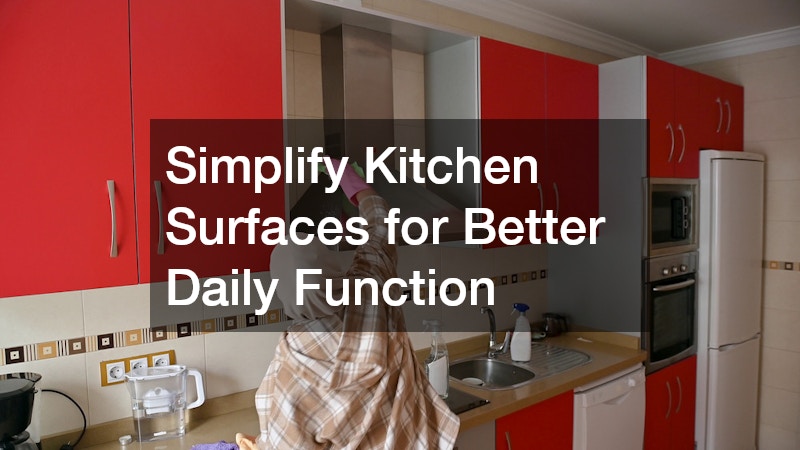
Simplify Kitchen Surfaces for Better Daily Function
The kitchen is one of the most frequently used spaces in any home, which also makes it one of the easiest places for clutter to accumulate. Small appliances, mail, grocery bags, and miscellaneous items can quickly take over.
Start by clearing everything off your countertops. This blank slate helps you see what you actually need within arm’s reach. In most cases, that list is shorter than expected.
Keep only daily-use items out, such as:
- A coffee maker or kettle
- A knife block
- A fruit bowl
Everything else can be stored in cabinets or drawers. If storage is limited, consider rearranging existing space before adding new solutions.
Surface materials also play a role in how easy it is to maintain a clutter-free kitchen. A porcelain countertop, for example, offers a smooth, durable surface that’s easy to clean and resistant to stains. When surfaces are simple to maintain, you’re more likely to keep them clear.
Inside drawers and cabinets, use dividers to prevent items from becoming jumbled. Even a small amount of structure can make a big difference in how functional the space feels.
Over time, maintaining a simplified kitchen becomes second nature. When there’s less to manage, daily cleanup takes minutes instead of feeling like a chore.
Create a Functional Bathroom With Minimal Clutter
Bathrooms tend to collect products quickly—half-used bottles, expired items, and duplicates that pile up without notice. The key to keeping this space functional is limiting what’s visible and accessible.
Begin by removing everything from the cabinets and drawers. This allows you to assess what you actually use versus what’s just taking up space. Most people are surprised by how many unnecessary items they’ve accumulated.
Once you’ve pared things down, focus on creating simple systems. Use small containers or dividers to group similar items together, such as skincare, hair products, or first-aid supplies.
Visual clutter also plays a role in how the space feels. Features like a glass shower can make the room appear more open and less crowded, even if the square footage stays the same. The transparency reduces visual barriers and helps maintain a clean, streamlined look.
To keep things from building up again, adopt a regular reset habit. Once a month, take a few minutes to discard empty or unused products. This small step prevents clutter from creeping back in.
A functional bathroom doesn’t require a complete renovation—just consistent attention and a willingness to let go of what you don’t need.
Improve Entryway Organization for Daily Efficiency
The entryway sets the tone for your entire home. It’s the first place you see when you walk in and the last place you interact with before leaving. When it’s cluttered, it creates unnecessary stress during already busy moments.
Rather than trying to keep the area perfectly clean at all times, design it for real-life use. Think about what you reach for daily—keys, shoes, bags—and create designated spots for each.
Hooks, trays, and small cabinets can help contain these items without making the space feel crowded. The goal is accessibility, not perfection.
There’s also an opportunity to integrate practical features without disrupting the flow of the space. For instance, security cameras can be positioned discreetly near entry points, enhancing safety while keeping the area visually uncluttered.
A helpful habit is the “end-of-day reset.” Before going to bed, take a minute to return everything to its place. This ensures that mornings start smoothly, without the frustration of searching for essentials.
When the entryway works efficiently, it reduces stress in ways that ripple through the rest of your day.
Turn Outdoor Spaces Into Organized Extensions of Your Home
Outdoor areas often get overlooked during decluttering, but they can significantly impact how your home functions. When organized properly, they become valuable living spaces rather than storage zones for unused items.
Start by evaluating what’s actually being used. Old furniture, broken tools, and unused décor can quickly take over patios and yards. Clearing these items creates immediate breathing room.
Once the space is open, think about how you want to use it. A well-maintained patio can serve as an extension of your living area—a place to relax, entertain, or simply unwind.
Maintenance plays a role here as well. Yard clutter often comes from ongoing upkeep tasks. Using a mulching service, for example, can reduce the need for constant weeding and cleanup, keeping outdoor spaces looking tidy with less effort.
Storage solutions like weatherproof bins or small sheds can help keep tools and seasonal items organized without cluttering visible areas.
When outdoor spaces are intentional and well-maintained, they add both function and enjoyment to your home.
Declutter by Category, Not Just by Room
One common mistake in decluttering is focusing only on individual rooms. While this approach can work, it often leads to scattered results and overlooked duplicates.
Decluttering by category—gathering all similar items in one place—gives you a clearer picture of how much you actually own. Seeing everything at once makes it easier to identify excess and make confident decisions.
For example, instead of organizing one closet at a time, pull all clothing into a single area. The same applies to books, tools, or household supplies.
This method is especially useful after major projects or updates. Following something like a roof installation, you might find leftover materials, tools, or equipment stored in multiple places. Consolidating these items helps you decide what’s worth keeping and what can go.
It’s a more intensive approach, but it leads to deeper, more lasting results. Rather than shifting clutter from one space to another, you’re addressing it at the source.
Maintain Your Decluttered Home With Simple Systems
Decluttering isn’t a one-time event—it’s an ongoing process. The difference between a home that stays organized and one that slips back into chaos often comes down to simple, repeatable systems.
Start with small habits. A few minutes each day can prevent clutter from building up again. For example:
- Put items back immediately after use
- Sort mail as it comes in
- Do a quick nightly reset of common areas
These actions may seem minor, but they add up over time.
Technology can also support these systems. Subtle tools like security cameras can help monitor activity around entry points or shared spaces, ensuring that your home remains both organized and secure.
The key is consistency, not intensity. You don’t need to spend hours maintaining your home—just a few intentional minutes each day.
When systems are simple and easy to follow, they become part of your routine rather than an added burden.
Make Thoughtful Upgrades That Reduce Future Clutter
Sometimes clutter is a symptom of deeper inefficiencies. Outdated materials, poor layouts, or high-maintenance surfaces can make it harder to keep spaces organized.
Investing in thoughtful upgrades can reduce these challenges over time. For example, durable surfaces like a basement epoxy floor can transform a previously neglected space into a clean, usable area. Similarly, streamlined materials such as a porcelain countertop make everyday maintenance easier, reducing the likelihood of clutter buildup.
The goal isn’t to renovate everything at once, but to make strategic improvements that support a more functional lifestyle.
Before making any changes, ask yourself:
- Will this make daily tasks easier?
- Will it reduce maintenance or upkeep?
- Does it support how I actually use the space?
When upgrades align with your habits and needs, they naturally contribute to a more organized home.
Building a Home That Supports Your Daily Life
A functional home isn’t defined by how little you own, but by how well your space supports your life. Decluttering is simply the process of removing what gets in the way.
As you move through these strategies, focus on progress rather than perfection. Some areas will come together quickly, while others may take time. That’s normal.
What matters most is creating systems and habits that feel sustainable. When your home is easier to maintain, it frees up time and energy for the things that truly matter—whether that’s relaxing, connecting with others, or simply enjoying your space.
Start small, stay consistent, and let each improvement build on the last. Over time, those simple changes will transform not just your home, but how you experience it every day.